


Cod still remains “fish” in Newfoundland and Labrador, but the optimism of growing cod stocks in the past few years has been tempered.
Newfoundland once had one of the world’s great cod stocks on the Grand Banks and in the 2J-3K NAFO area off the northeast coast of Newfoundland and off Labrador.
According to George Rose of Memorial University, one of the world’s foremost scientists on Atlantic cod, the collapse of the stock in the early 1990s was precipitated when most of the northern fish moved south to follow capelin in the late 1980s, which were no longer appearing in the north.
This led to huge aggregations around the Grand Banks and a false sense of abundance as miles and miles of cod aggregations were visible on sonar screens. This set the stage for overfishing and a subsequent cod collapse which triggered the modern era of certification assessment and precautionary fisheries management.
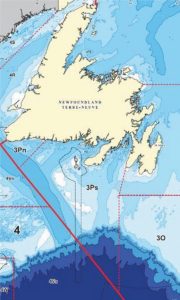
Newfoundland also has an important, smaller cod stock on the south coast, in NAFO area 3Ps.
This stock, though far smaller than Northern cod, supports an inshore gillnet fishery. It too was subject to the original cod moratorium and the scientific consensus is that it is likely made up of fish from various areas, not necessarily acting as a single stock.
It also has been the site of a sentinel fishery, which was maintained after the cod moratorium to monitor changes in cod stocks.
Last year, 4,700 tonnes were landed from 3Ps and the fishery has consistently landed less than its total allowable catch (TAC). It is a bread and butter inshore fishery, but is also important to offshore trawlers which have 12 per cent of the total quota.
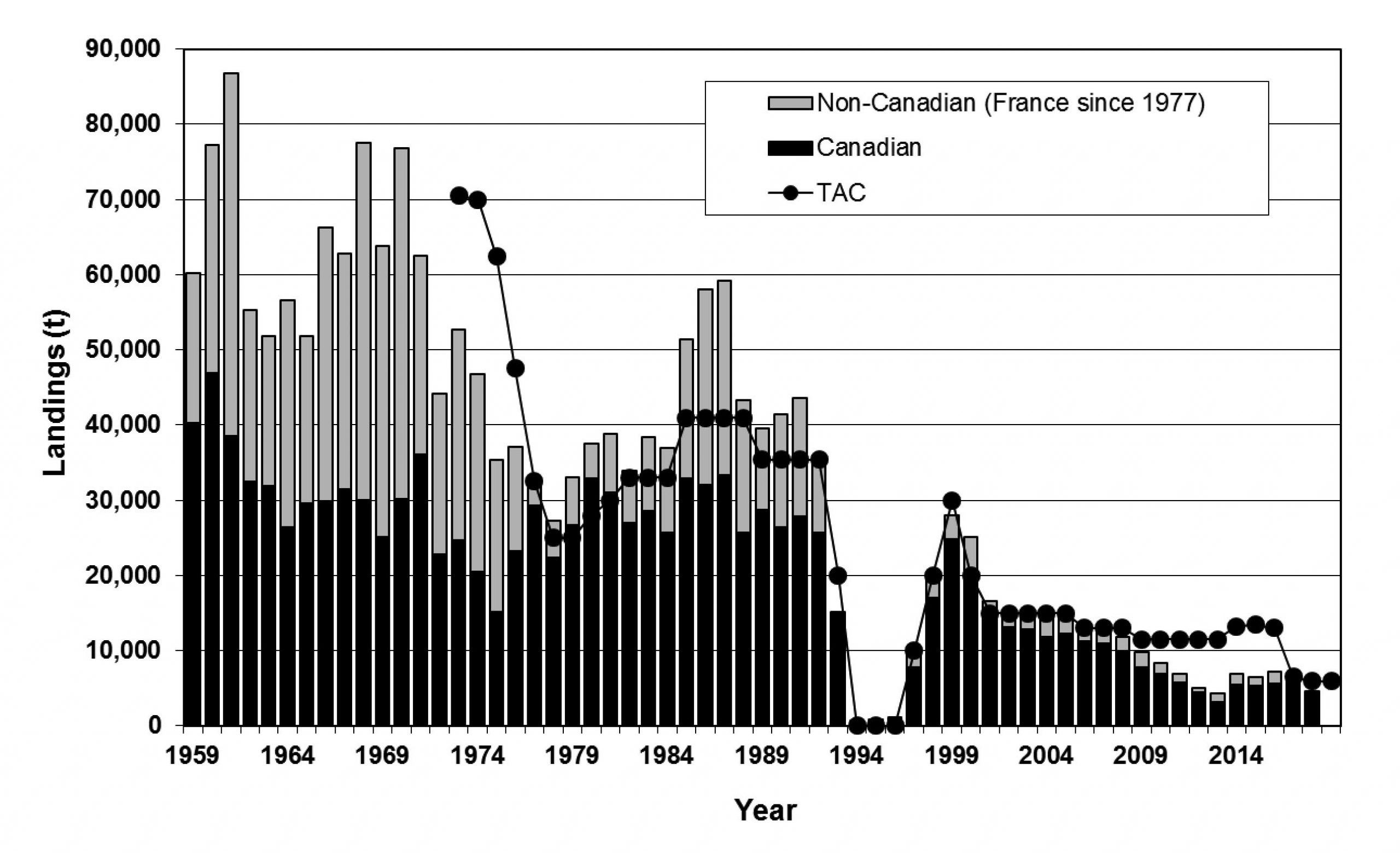
After some optimistic increases, the stock has been declining year after year for the past five years, largely due to natural mortality, which is three times as high as fishing mortality.
One of the factors in the fishery is heavy seal predation on cod.
With this level of complexity, the recent technical meeting with industry on 3Ps cod was likely to be difficult.
That makes it all the more remarkable that the Department of Fisheries and Oceans (DFO) dropped in a radically new assessment model, which immediately flipped its view of the fishery from one that had been above its spawning stock biomass reference limit, to one that was now severely overfished and was at only 24 per cent of its critical threshold. Given this new view, DFO’s advice was to restrict catches to the maximum extent possible.
This has provoked a strong reaction from both harvesters and processors.
Harvesters are focused on an allocation fight and have been pressuring DFO to revoke the 12 per cent of the stock taken by the offshore fleet. This is in a way shooting themselves in the foot.
The reason is that the predictability and year-round nature of the offshore portion of the harvest is a critical factor in the operations of Icewater Seafoods, the largest cod plant in Newfoundland and the major buyer of 3Ps cod.
It is only through balancing a year-round supply that Arnold’s Cove-based Icewater can afford to pay the higher cod prices union members are demanding and provide a stable 12 months of work to its plant workers.
Cutting off the 12 per cent offshore supply in this situation would throw the value of the fishery to a lower level, as it would be exclusively an inshore summer gillnet fishery and it would no longer be suitable for year-round program business.
But the Atlantic Groundfish Council, representing the offshore fleet and some of the major cod processors, is also very upset with the way the DFO imposed its model. As a result, it has come out in opposition to setting TACs based on this model it says is severely flawed.
This is where the weakness of DFO’s command system for fisheries science comes into play.
When making a change as drastic as it is proposing for 3Ps cod, transparency and peer review of the science is essential. Although there was some peer review, the most basic question was avoided.
DFO says on one hand that ecosystem changes are occurring, with less phytoplankton productivity and more warm water species such as dogfish. So, in essence, the 3Ps ocean today is quite different than 30 years ago.
But at the same time, the major change in the DFO model was to incorporate stock catch data back to 1959, rather than use survey data that only went back to 1994 in the previous models. How can it make sense to put more weight on a longer historical time series, while at the same time point out that that historical ocean no longer exists today?
DFO claims to be holding open meetings with scientists and industry stakeholders. Yet there is no mechanism to acknowledge shortcomings and make compensatory recommendations.
The fact that three outside scientists were brought in as peer reviewers is not sufficient to answer the question as to why the longer historical timeline is justified.
The effect of the timeline is to change the model, as the new higher reference point is based on the years in the 1960s and 1970s when there were high landings, from a totally different ecosystem.
There is definitely a negative environmental shift going on along the south coast of Newfoundland. For years, the cod TAC has not been taken. Also, snow crab has been very weak in this area. So DFO’s efforts to update its modeling is not wrong.
It’s just that when its decision process is not subject to wider scientific and industry peer review with the authority to demand changes, it can stick to flawed models with impunity.
These flawed models have real-world consequences.
By drastically changing the parameters of the fishery, the fishery improvement projects (FIP) and certifications buyers rely on are called into question. The Atlantic Groundfish Council voluntarily suspended its MSC certification for 3Ps cod in 2017 when the stock decline became apparent. Since then, the fishery has continued to be monitored under a FIP.
But setting a reference limit where the fishery now has to behave more as it did in the 1960s and 1970s creates an impossible situation. The ocean has changed drastically, but the certifiers will be forced to react to new classifications.
Further, DFO recognizes that it may very well make more changes in 2021 as it refines and revises what is a very controversial model, further upending any stability in the 3Ps cod fishery.
This is an example of how current fishery management processes are ill-equipped to deal with environmental changes. When a fishery gets worse, one group initiates an allocation fight stating “if we can get rid of the big trawlers, we’ll be okay.”
Yet from a stock status, the impact of the smaller gillnet fleet, plus the recreational fishery, already vastly outweighs the impact of the trawlers.
If there is a need to protect spawning allocations, that can be done with closed areas. But every major cod fishery in the world, except the Newfoundland inshore fishery, fishes on spawning aggregations in the winter. This is the basis of the cod fisheries in Norway and Iceland, of the Lofoten fishery and of the Pacific cod fishery.
There is little likelihood that winter fishing in Newfoundland is somehow negatively impacting cod. Instead, the issue is whether total removals are within the right parameters.
The other problem is scientific instability.
The worst fights over fishery management happen when scientists tell the industry one thing consistently for years and then change their mind without adequately explaining new data.
Two more productive approaches might be to first, adopt a two-year or multi-year time frame, so not all changes are compressed into a single year and secondly, to run with both models for a period of time, possibly compromising between them, while the data picture becomes clearer.
In any case, with 3Ps cod, we have an environmental problem of lower productivity and possibly a predation problem with seals.
Fishing mortality is not driving the changes in the stock and for that reason, slowing down abrupt management changes to fishing mortality makes sense.
If fishing accounts for 25 per cent of the stock mortality, it will not make a difference in the near term whether that goes to 20 per cent or 30 per cent. It is the environmental change that is still driving the outcome.
The sooner our managers recognize this and move away from the traditional single stock single year assessment models, the better.
This article was republished with permission of John Sackton and seafood.com.


