


As part of a five-year action plan, the Newfoundland and Labrador Fish Harvesting Safety Association (NL-FHSA) is rolling out safety designate training for fish harvesters.
“One of the things when we developed our strategic plan was fishing vessel safety designate training,” said NL-FHSA Executive Director Brenda Greenslade.
“The training has been approved and we’re in the process of making it available to harvesters. So, the first thing we have to do is test it because it’s different training. It’s online, so we need to test it to make sure that it’s accessible to all harvesters all over the province — Newfoundland and Labrador.”
The training includes 11 modules, designed for harvesters and presented by harvesters from all different fleet sectors in their work environments, as well as families of fish harvesters and mandates from government agencies such as Transport Canada.
The modules cover a range of topics like regulations, roles and responsibilities, identifying hazards, workplace inspections, worker’s compensation, reporting workplace injuries and success.
“So, basically, it’s all about fishing,” said Greenslade. “Oftentimes, you can go to occupational health and safety training and it’s general training that has been designed to fit any industry. Like construction safety, this is a similar model to that, but it looks solely at safety for fish harvesters working in dangerous, life-threatening, unique situations at sea.”
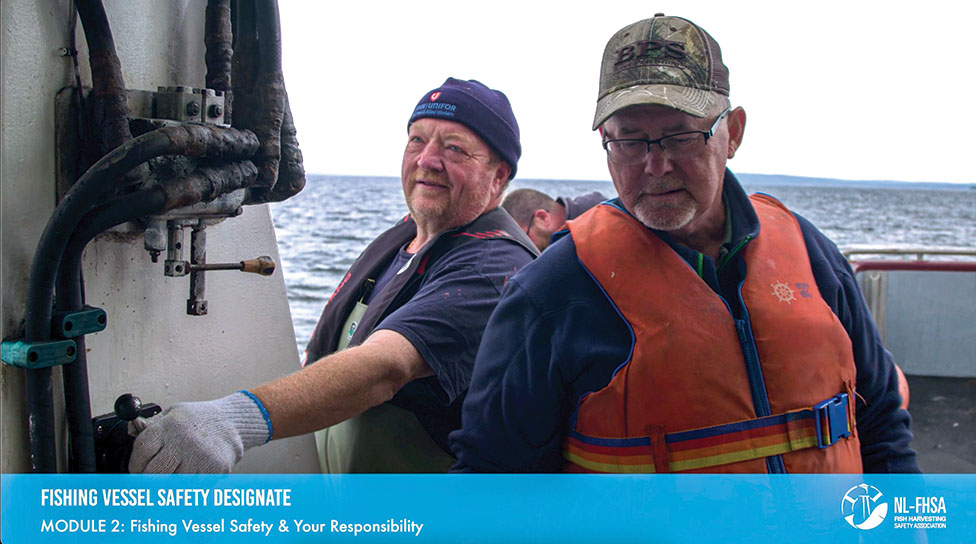
In learning about roles and responsibilities, NL-FHSA covers the roles of both owner/operators and crew members. This module covers rights such as knowing about hazards one is exposed to, the right to participate in health and safety training, resolving workplace hazards as well as refusing and reporting unsafe work conditions. The module also covers other means of loss, such as the likelihood that an owner/operator could lose their vessel.
“In my experience, that’s a daunting process. Harvesters face many hazards in their workplace. A lot of them are unpredictable,” said Greenslade.
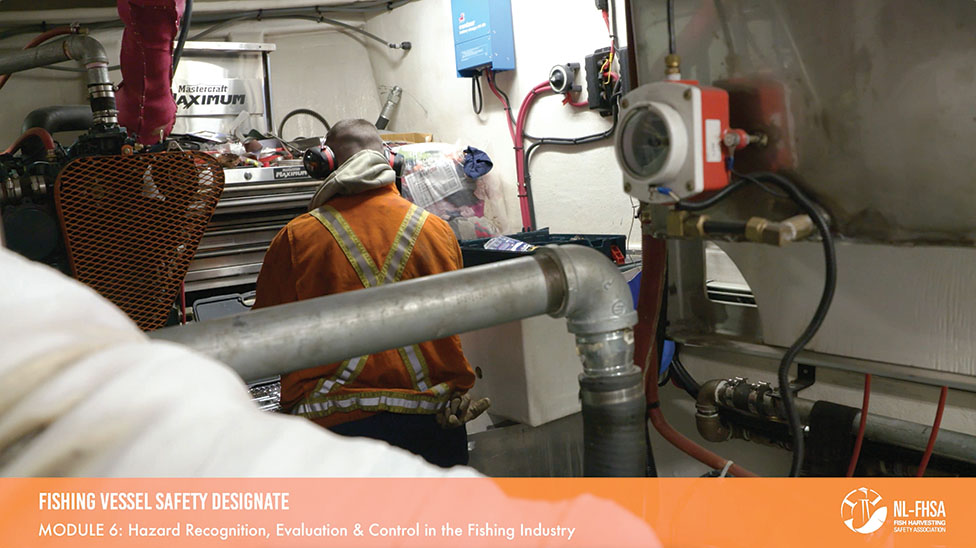
“People have different experiences. Crew members have different exposure times to working at sea, and different experiences. So, it talks about how you can identify hazards in the workplace and how you can break them down into physical hazards, and environmental hazards and how you can mitigate those. It talks about what a risk is — what’s the likelihood that you can be injured by doing certain activities and certain tasks and what would be the degree of injuries you could sustain?”
The module on workplace inspections addresses the unique aspects of inspecting vessels and notes that no two ships are exactly the same.
“When you’re preparing for the season, it’s important to do workplace inspections to make sure that your vessel is adequately maintained, that you have all the necessary equipment to not only do the business of fishing but to respond if and when an emergency arises,” said Greenslade.
The safety designate training provided by NL-FHSA highlights the importance of a well-trained crew.
“It speaks to doing emergency drills on a regular basis before you go to sea and when you’re at sea so that when a situation arises, because they’re unpredictable, you need to be able to respond very quickly. So, it almost needs to be innate,” said Greenslade. “You see something, and you’re able to respond to it immediately.”
Another key aspect of the training is knowing how to report injuries and apply for worker’s compensation. It highlights preparing for sustaining an injury, the resources available to help injured workers, ensuring proper treatment, understanding insurance policies and safely returning to work.
“Early reporting is very important,” said Greenslade.
“What happens if you’re unable to go back fishing right away? What’s the process that you need to follow? We strongly advocate that people prepare for unknown situations. It’s one thing to go fishing, but there’s more to it than that. You need to know when something happens, what are your options?”
The last module, titled success, looks at keeping yourself, your enterprise or your workplace safe.
“It’s about looking at what success looks like,” said Greenslade. “It’s a business model. You’re fishing, you want to have the best result that you can, and that includes keeping your enterprise safe and keeping your people safe when they’re fishing.”
The NL-FHSA believes that job-specific training is the best way to keep people safe in their field of work. Given the large scope of the fishing industry in Newfoundland and Labrador and how widespread the workforce is across the province, Greenslade says it’s imperative to get training out to all harvesters in an easy-to-digest manner.
“We have in excess of 10,000 fish harvesters in this province working on over 3,000 enterprises and they are spread throughout 17,542 kilometres of coastline within Labrador and the island,” said Greenslade. “It is a huge challenge to try and get training out to people in all of these nooks and crannies. That’s why we seriously looked at developing online learning and making it accessible to everybody and that it looks at their industry.”


